Articles Posted in Car Accidents

According to the National Highway Traffic Safety Administration‘s 2008 data, Massachusetts experienced more than 300 deaths from car accidents in Boston and elsewhere throughout the state. This study illustrates an 8 percent decrease from the previous year. But wait! NHTSA data for 2010 for Region 1, which includes Massachusetts, indicates an 18 percent increase in these motor vehicle accident deaths from 2009.
768180_urban_traffic.jpg
Our Boston car accident attorneys recognize that these statistics help us to examine traffic trends and help us identify problem areas that need to be focused on to help prevent future traffic accident deaths in our area. Even with the recent decrease in the number of accidents, we’re still way over the average from just 2 years ago. More needs to be done to raise driver awareness to get drivers to focus on the roadway.

In 2009 in Massachusetts, 44 percent of drivers that were involved in an accident with an intoxicated driver died. The majority of motorists killed on our roadways lost their lives on non-interstate roadways with a speed limit of at least 55 mph. Nearly half of all those killed in traffic crashes in our state were killed in a passenger car, which is the most common to drive in the United States. The next deadliest vehicle on our roadways was light trucks, counting for more than 30 percent of the total vehicles involved in fatal accidents.

It’s surprising that Massachusetts has such high motor-vehicle death rates considering we have strict seat belt laws. Law enforcement enacted seat belt laws as a secondary enforcement, meaning that you can receive a ticket for not wearing your seat belt after being pulled over for another violation. This applies to all drivers and can land you with a $25 fine. This may be a main contributor to our observed seat belt use rate of 98 percent for the year. There are exemptions to this rule though. Taxis, buses, school buses, medical, postal service vehicles, commercial vehicles that make frequent stops and all vehicles built before 1965 are exempt from the seat belt law.

Later this summer, the preliminary stats for 2010 car accidents will be released. As our economy recovers, many safe driving advocates expect all of these numbers to rise. Data from the last few decades illustrates that the number of motor vehicle accidents directly mirrors the economy.

In an attempt to reduce these fatality numbers even more, we offer all motorists these driving tips:

  • Slow down. Driving above the speed limit greatly reduces the amount of time you have to react to a road hazard. Increased speed also increases the impact upon collision which increases your risk of serious injury — or death.
  • Look around. Always be aware of your surroundings. Don’t get lost in the hypnotic stare in the lane in front of you. Know what is to your left, right and rear at all times.
  • Double check. Look, and look again, before making any maneuvers on the roadway.
  • Seat belt. The use of a seat belt has been proven to greatly reduce your risk of injury and death in the event of a motor-vehicle accident.
  • Checkup. Be sure to always keep your vehicle in proper-running condition.
  • Blind spots. Be careful of the blind spots of your own vehicle and the blind spots of other vehicles. If you can’t see another driver, they can’t see you.
  • Blinkers. Always use your turn signals to alert other drivers of your plan of action on the road.
  • Weather. Always adjust to weather conditions, whether that means slowing down, tuning on your hazard lights or turning on your lights.

Continue reading

Massachusetts is a state that offers new teen drivers a three-stage licensing process in an attempt to keep our young drivers safe and out of car accidents in Boston and elsewhere throughout Massachusetts. Our state has picked up on this system because it has proven to help teens become better drivers by allowing them to gradually gain exposure to driving situations through an increased amount of supervised driving, learner’s permits and junior operator’s licenses.
1260787_hand_on_keyboard.jpg
All of this information, and more, is available to you through a custom website designed by AAA’s Keys2Drive: The AAA Guide to Teen Driver Safety. This is a newly launched website that allows residents in any of the 50 states to select their state to view personalized information about their teen drivers.

Our Boston personal injury attorneys would like parents to know that the most important thing they can do to increase the safety of their teen driver is to get involved in their learning process. It is important that you coach your teen, allow them plenty of supervised driving time and talk with them about the dangers and consequences of poor driving habits. Being involved in your teen’s learning process will help you to keep an eye on their progress and ultimately decide when they’re ready to get their license and jump behind the wheel.

According to the National Highway Traffic Safety Administration, there were nearly 2,500 teen drivers killed during motor-vehicle accidents in 2009 alone. Another 196,000 teen drivers suffered injuries during these accidents. Throughout that entire year, more than 5,000 15- to 20-year-old drivers were involved in motor-vehicle accidents that resulted in a motorist death. In Massachusetts, there were nearly 200 teen drivers killed in these accidents in 2009.

Parents are, in large-part, responsible for teaching their teen driver’s safe driving habits. Parent involvement should be used to try to better prepare our teens and to try to reduce the number of these fatal accidents.

According to the customized AAA website for Massachusetts, parents should try the following to help teach their young driver:

  • Provide your child with at least 100 hours of supervised driving before you allow them to hit the road solo. It is recommended that you complete the hours during all times of the day.
  • Allow your teen to drive in a number of conditions. Allowing them to drive through different weather conditions and through varying road conditions will help them to gain experience and should better prepare them for almost anything driving has to throw at them.
  • Shower them with positive feedback, when deserved. It is important to remain calm and talk positive through them. Yelling at them will only frustrate them behind the wheel and negatively affect their driving abilities.
  • Set good examples. When your teen is a passenger in your vehicle, make sure you’re practicing what you preach; don’t speed, put down your phone, abide by traffic laws, wear your seat belt, the list goes on and on.

As motor-vehicle accidents continue to be the number one killer of teens, more than cancer, homicide and suicide combined, parents are urged to get involved and stay involved. With the proper education and experience, we can help decrease the risks of these deadly accidents for our teen drivers.

It is also recommended that you create a parent-teen driving agreement between you and your teen to help the two of you agree upon some ground rules for driving.
Continue reading

It’s no secret that our eyesight, our function, our coordination and our other safety skills unfortunately decline with age. Do we honestly know when it’s finally time to call it quits? Doing so can help guard against the dangers of being involved in a serious — or fatal — car accident in Boston.

According to the National Highway Traffic Safety Administration (NHTSA), there are a few warning signs that may signal to us that were no longer able to drive safely. Health Day suggests that you look within yourself to answer this question as no one is able to judge you better than yourself. Is it safe for you to be driving?
1057590_old_pickup.jpg
Our Boston car accident lawyers understand that aging comes with a number of obstacles, with older drivers having some of the greatest risks for serious injury. You are urged to follow the advice and recommendations in this blog, and honestly ask yourself, “Am I safe behind the wheel?”

Are you experiencing any of the following:

-Are you getting lost when taking a familiar route?

-Are you getting ticketed for numerous driving violations?

-Have you been getting into fender-benders or near-misses?

-Are there new scratches or dents on your car?

-Have you received a recommendation from a doctor suggesting that you reduce your diving or stop altogether?

-Do you have health problems or are you taking medications that can affect your driving?

-Do you find road signs or road markings overwhelming?

-Do you find yourself driving too fast or too slow for no particular reason?

According to the National Highway Traffic Safety Administration, citizens aged 65 and older made up nearly 15 percent of the total resident population in the United States in 2009. Of this 15 percent, nearly 5,500 people of this age group were killed in motor-vehicle accidents throughout the year. Another 187,000 seniors suffered injuries from these crashes.

The older driving population made up nearly 10 percent of all people injured in traffic accidents in 2009 and made up nearly 20 percent of all traffic fatalities. The number of injured drivers in this age group increase 2 percent from the previous year.

Nearly 100 elderly drivers, those above the age of 64, were killed in motor-vehicle accidents in Massachusetts in 2009.
Continue reading

A man that was involved a motorcycle accident in Boston late last month has died. The Springfield man, 24-years-old, was involved in the accident on May 25th and was pronounced dead earlier this week, according to Mass Live.
697620_single_bike.jpg
The accident happened when a car collided with the motorcycle on Boston Road on that late evening in May. Police speculate that speed was a factor in the crash. The motorcyclist reportedly lost control of his vehicle while rounding a curve. He skidded for about 100 feet before coming to a stop near Dezi’s Jewelry Exchange and Pawn Shop.

Our Boston motorcycle accident attorneys understand that motorcyclist are more vulnerable to serious — if not fatal — accidents on our Massachusetts roadways. This is the second motorcycle-related fatality already this spring.

The motorcyclist was at the Baystate Medical Center in critical condition for about a week after the accident.

The motorcycle accident from earlier this year took the life of a 55-year-old rider back in April. In this accident, the motorcyclists collided with a truck towing a trailer on Route 9 in Ware. The truck reportedly jacknifed into the motorcycle’s lane. The rider died three days after this accident. Police are still investigating this accident.

Motorcycle riders are nearly 40 times more likely to die in a motor-vehicle accident than the occupants of the other vehicles reports Tim Aloisio of Monson, The Republican‘s motorcycle columnist and a member of the Massachusetts Motorcycle Association. He also reports that two-thirds of the time it is the fault of the automobile operators.

The Governors Highway Safety Association (GHSA) projects that motorcycling fatalities declined from 5,290 in 2008 to 4,762 or fewer in 2009.

Here are some motorist safety tips, provided by Motorcycle Safety News, to help keep our motorcyclists safe on our roadways:

-Look, and look again, for motorcyclists when at intersections and when changing lanes.

-Motorcycles typically appear to be farther away than they actually are. This is because of their small size. Always assume that they’re closer than they appear.

-Take extra time to check your blind spots before maneuvering through traffic as bikes can easily get lost in these spots because of their small size.

-Bikes also seem to move faster than they actually are, again because of their size. Don’t assume that all bikers are speed demons.

-Motorcyclists often slow down by downshifting, which does not activate their brake lights. For this reason, allow more following distance when riding behind a bike.

-Motorcycle turn signals are not self-canceling like the ones on our vehicles are. Be sure that a motorcyclist signal is for real when moving around them.

-Don’t expect a motorcycle to always be able to dodge out of the way. Maneuverability may be one of their better characteristics, but it can’t always save them from a collision.

-Remember that the stopping distance is the same as that of a vehicle. Do not tailgate.
Continue reading

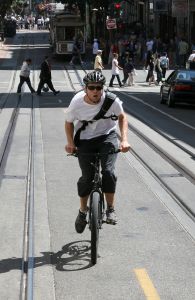
A recent article on Boston.com brings up some excellent points about proper bicycle maintenance. With summer here, many residents will be dusting off their bikes and hitting the town both on foot and on two wheels. Riders are not only urged to be cautious of motor-vehicle traffic during their adventures through the city, but to also to be cautious about the condition of your bicycle. A properly kept bicycle can mean the difference between safe travels and a Boston bicycling accident.
1192075_riding_a_bike.jpg
In the Boston.com article, the author noticed a bicycle on his walk home that had been locked to a fence with the seat removed for months. Many bicyclists remove their seat to avoid bike theft. As the seasons changed, the bike remained locked to that fence. It had grown rusty and had almost seemed abandoned.

Our Boston bicycle accident attorneys urge all of our two-wheeled travelers to take good care of your bikes, in every season. Be sure that your tires always have enough air, that it’s equipped with proper lights and reflectors, that your chain is well oiled and that the brakes work properly. Many accidents can be caused by malfunctioning equipment. Venturing out on a bike that’s not taken care of can result in an increased risk for accidents in our area.

Once the snow cleared and the sun shined through, the bike’s owner appeared. The author spotted her one day bent over her bicycle with a can of WD-40 in her hand.

Tips to help you, and other fellow riders, to enjoy the bike riding season safely:

-If you’ve neglected your bicycle all winter long, be sure to check it out completely before breaking it out this spring or summer. Check to see if the tires look dry or cracked. Check your brakes. If you are not comfortable with these types of repairs, take your bicycle to a local repair shop for some help.

-Learn how to change a flat tire. Make sure each tire is fully inflated and free of debris. Inevitably you will eventually experience a flat tire. Learn how to change it yourself to be better prepared or to even help someone else out.

-Be considerate. If you see a bicyclist pulled over on the ride of the road, ask if they need any help. Bicyclers need to help and protect one another.

-Always wear your helmet. Statistics show that it can save your life. Your risk of serious of fatal injury greatly increases if you’re not wearing a helmet during the time of an accident.

-Learn the rules of the road. Look both ways, obey traffic lights, ride with the flow of traffic and wear light or bright colored clothing.

-Never pass another bicyclist on the right. This is especially important if they’re stopped at a red light. When you do pass someone, call out: “On your left” to let them know your whereabouts.

According to the National Highway Traffic Safety Administration, more than 600 bicyclists died in 2009 because of accidents involving a motor vehicle. These fatalities accounted for 2 percent of all traffic deaths during the entire year.

Most of these bicycling deaths from 2009 happened in urban areas at non-intersection. Most of them also occurred during the daytime hours, between 4:00 a.m. an 8:00 p.m.
Continue reading

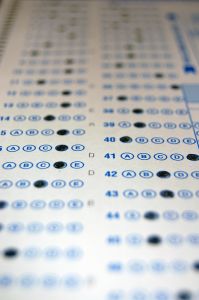
Recently, GMAC Insurance released the results for their 2011 National Drivers Test. These tests are nothing to brag about as the study concluded that 1 out of every 5 drivers fails to meet basic road requirements to obtain a driver’s license. This means nearly 37 million American drivers, or roughly 20 percent of motorists on our roadways, would not be able to pass the written drivers test if they were to take it today. This lack of road knowledge greatly increases the risks for a car accident in Boston.
517386_scanning_test.jpg
“The GMAC Insurance National Drivers Test has become the benchmark for America’s driving IQ,” said Scott Eckman, chief marketing officer, GMAC Insurance. “All Americans need a refresher course when it comes to rules of the road and it begins with education. We’re hoping this year’s GMAC Insurance National Drivers Test results will inspire drivers to arm themselves with the knowledge they need to stay safe.”

Our Boston car accident attorneys note that these test results concluded that the average score on this GMAC drivers test was less than 78 percent in 2011. While this is a near 2 percent increase from the previous year, the average score is still alarmingly low. This means that a large number of motorists on our roadways lack basic knowledge of driving skills and rules.

Nearly 90 percent of drivers that took this test could not identify the correct action to take when pulling up to a steady yellow traffic light. One a quarter of tested drivers were able to list safe following distances.

“All Americans need a refresher course when it comes to basic driving rules,” said Gary Kusumi, CEO and president, GMAC Insurance – Personal Lines. “Being a safe driver is about conduct, judgment and knowledge. We’re hoping this year’s results encourage people to arm themselves with the knowledge they need to stay safe.”

Massachusetts’ drivers rank 47th in the United States in driver intelligence. Our state dropped nine spots in the rankings since the previous year when we ranked 38th.

The Northeast region of the country submitted the worst scores of all regions. The Midwest region scored the best on this test. Typically, male drivers scored better than female drivers, with roughly 14 percent of men failing the test compared to approximately 27 percent of women. Older drivers also tested better.

The GMAC Insurance National Drivers Test is conducted to serve as a reminder to drivers to freshen up on their credentials to help decrease their risk of being involved in an accident.

“The GMAC Insurance National Drivers Test shows me that too many Americans are coming up short when it comes to knowing the rules of the road,” said Casey Mears, driver of the No. 25 National Guard/GMAC Chevrolet in the NASCAR NEXTEL Cup Series. “Whether you’re on the race track or in the real world, it’s about being safe, respecting other drivers and being educated about how to handle certain situations.”

The 2011 test quizzed driver knowledge through a series of 20 questions taken from state Department of Motor Vehicles (DMV) tests. National data was weighted to percentage of state population, gender, ethnicity and age. The seventh annual survey had 5,130 licensed driver participants between the ages of 15 and 66 from all over the country.

Want to give the GMAC Insurance National Driving Test a whirl and see how your driving knowledge measures up? Visit their website and test your driving skills.
Continue reading

The summer is here and that means school’s letting out soon and student drivers will be hitting the road in full force. The summer also kick off the start of the 100 deadliest days of the year for teen drivers, according to Mother’s Against Drunk Driving.
768180_urban_traffic.jpg
Nine out of the ten top deadliest days for young drivers occur between the months of May and August. In 2009, our nation’s roadways witnessed roughly 3,000 teen drivers die in in teen car accidents in Boston and elsewhere. Another 350,000 went to emergency departments with injuries suffered from these accidents.

Let’s put it this way, this is a statistic that says that your child is most likely to die in a motor vehicle accident during this summer. Our Boston car accident attorneys have seen these tragedies occur all too often. For this reason it is important that we send out our young drivers with all the tools they need to help keep them safe on our roadways during these summer months and throughout the year.

In 2009, Massachusetts witnessed nearly 50 teen deaths from motor vehicle accidents that involved a driver aged 15 to 19, according to the National Highway Traffic Safety Administration (NHTSA).

Mother’s Against Drunk Driving offers parents these safety tips to help keep their teens safe on our roadways this summer:

-Make sure that your teen knows and understands the effects and consequences of drinking and driving.

-Insist that your teen wear their seat belt whenever a vehicle is in motion. Minimal seat belt use is one of the leading causes for driver and passenger injury and death.

-Be sure to curb their distracted driving habits. Establish rules that prohibit the use of cell phones, texting or any other dangerous activities behind the wheel.

-Limit the amount of time that your teen can operate a motor vehicle during the evening hours.

-Set a limit to the number of passengers that your teen can drive with at any given time.

“Car crashes are the number one killer of Texas teens,” said Allstate Agent Michael Walker. “Summer is almost here and when school is out, more teens will be hitting the highways across the state. This data should spur parents and community leaders to take action and teach our teen drivers that speeding, distractions and carelessness can be costly.”

A recent study, conducted by the Allstate Foundation concluded that roughly 90 percent of teen drivers consider their parents as the biggest influence on their own driving habits. For this reason, we continue to urge that you speak with your teen about the importance of good driving habits and the consequences of poor choices behind the wheel. Parents are also urged to negotiate a parent-teen driving agreement with your young driver in an attempt to set with some ground rules that you and your teen driver can agree on.

According to the Insurance Institute for Highway Safety (IIHS), teen accidents are four times more likely to occur than accidents in any other age group.

Teens made up 10 percent of the U.S. driving population in 2008 and made up 11 percent of all motor vehicle crash deaths. They accounted for nearly 15 percent of passenger vehicle occupant deaths among all ages, nearly 10 percent of all pedestrian deaths and approximately 5 percent of motorcyclist deaths
Join the Mother’s Against Drunk Driving facebook page for more tips and advice about keeping your young driver safe on our roadways during their summer break.
Continue reading

Massachusetts State Police will be hitting the roads full force over the Memorial Day holiday weekend in an attempt to crack down on seat belt violators, enhance traffic safety and to reduce the risks of a holiday car accident in Boston and elsewhere throughout the state.
298297_backseat_driver.jpg
The Executive Office of Public Safety and Security (EOPSS) and the Massachusetts State Police recently launched their “Click It or Ticket” mobilization campaign as a statewide effort to increase the visibility of traffic enforcement officers and to increase awareness of seat belt usage. The campaign launched earlier this week and will continue through the first week of June.

Our Boston car accident attorneys understand that residents face an increased risk of being involved in a car accident over this long holiday weekend. As many residents and visitors will be hitting our roads to kick off the start of the summer season, we urge all motorists to practice extra cautious driving habits behind the wheel.

Massachusetts State Police will be teaming up with more than 180 local police departments to enforce their zero-tolerance policies for seat belt laws. Officers will be issuing tickets to all vehicle occupants who are busted not wearing their seat belts.

“Seatbelts are your best defense in a crash, yet more than 25 percent of drivers still fail to buckle up,” said Colonel Marian McGovern, superintendent of the Massachusetts State Police. “Tickets will be issued to those who are pulled over and are not wearing their seat belt or if any passenger in the car is unbelted. Everyone in a vehicle needs to buckle up.”

In the State of Massachusetts, it is against the law to ride in a motor vehicle without wearing your seat belt. This law applies to all vehicle occupants. If caught breaking the law, a citation and a fine will be issued to the driver and each passenger that is not properly restrained.

The “Click It or Ticket” campaign has reeled in more than $543,000 for federal highway safety funds. Nearly $500,000 of the money collected has been distributed to state and local police forces to help fund addition enforcement. These funds will go towards public information and awareness programs and additional enforcement during these mobilization periods.

The National Highway Traffic Safety Administration estimates that a little more than 50 percent of passenger vehicle occupants involved in motor vehicle accidents in 2009 in Massachusetts were killed because they were not wearing their seat belts at the time of the accident. It is also estimated that the use of a seat belt, when worn correctly, can decrease the risk of death for front-seat passengers by nearly 50 percent. These odds see an increase of 10 percent in SUVs, minivans and pickup trucks in an accident.

We wish everyone a happy Memorial Day and urge all residents to celebrate their long holiday weekend safely and ask that all motorists practice safe driving skills:

-Be alert on our road by allowing yourself enough rest before heading out on your holiday trip. Avoid drowsy driving.

-Don’t drink and drive and help to make sure your friends and family do the same.

-Make sure that you, and everyone in your vehicle, is buckled up correctly when the car is in motion.

-Halt all distracting driving habits when behind the wheel.
Continue reading

A State Trooper was hit by a speeding vehicle during a speed enforcement detail earlier this week, according to Boston.com. While he was flagging down speeders to help reduce the number of car accidents in Boston, he became a victim.
1172422_police_on_the_scene.jpg
The officer was working detail in a highway tunnel in South Boston when the accident happened. The driver sped off after striking the officer, but was captured on video by a number of surveillance cameras. The hit-and-run motorists left the officer lying in the street.

Our Boston car accident attorneys understand the dangers that our local law enforcement officers face to help keep our residents safe. As officers and troopers put their lives on the line every day to prevent motor vehicle accidents on our roadways, it is not uncommon for them to be involved in one on the job.

“We absolutely plan on catching him,” said David Procopio, a State Police spokesman.

The accident happened shortly after 9:00 a.m. on Monday on the ramp of I-90 East from I-93 North. After the accident, he was transported to Boston Medical Center. He was last reported to have been being treated for serious injuries and is expected to survive.

“Once again, we are reminded of the inherent dangers of a state trooper’s job, and once again we find ourselves saying ‘but for the grace of God, we could be planning another trooper’s funeral,’ ” Procopio said.

Photos from the surveillance video were released and showed a black two-door sedan. The vehicle had light-colored interior with dark-tinted headlights. Officers believe it may have been a Honda Civic from the late 90’s or early 2000’s.

In the meantime, State Police are searching for two potential witness vehicles which they believe to have seen the hit and run vehicle. Police believe these motorists may be able to help them to identify the careless driver.

Massachusetts crime scene investigators are also combing the trooper’s uniform in search of any physical evidence that may help them to find the vehicle.

“We are utilizing whatever investigative means are available to us to zero in on this car,” said Procopio.

They also suspect that the fleeing vehicle suffers from minor damage. They further describe the damage as dents and scuff marks on its right front bumper, fender, hood, and windshield.

It is estimated that since the beginning of last year, the state has witnessed 44 state troopers struck by motor vehicles while they were on duty. About half of these incidents involved a driver that was under the influence of alcohol or drugs during the time of the incident.

According to National Public Radio (NPR), there were nearly 200 police officer deaths nationwide in 2009.
Continue reading

Earlier this month we posted on our Car Accident Lawyer Blog that May is Bike Month, and local businesses are hosting events all over town to raise awareness about bicycle accidents in Boston and elsewhere throughout Massachusetts.

The Boston.com reports that the city will be hosting 20 cycling events and at least 80 more throughout the Greater Boston region in honor of Bike Week. Boston Bike Week will be launched with events like the Kickoff Party at Giant Cycling World and Mayor Menino’s Bike Week Festival at City Hall Plaza.
1104901_bike_on_concrete.jpg

Our Boston bicycle accident lawyers know that these events can be fun and entertaining, but we want to remind enthusiasts to be safe as they partake in the activities. Traffic will be heightened with both cars and bicycles, so be extra careful as you maneuver around town attending these events.

Municipalities, businesses and educational institutions throughout the state are excited about the MassCommuter Challenge being hosted May 14-20, 2011. The Challenge is a free and friendly competition open to anyone who lives, works or attends school in Massachusetts. Residents, students and employees pledge to bike everywhere they go throughout the week, or make as many trips as they can, to promote personal health and an eco-friendly environment.

Not everyone is excited about Bike Week with the anticipation of bike lanes being built along a stretch of Massachusetts Avenue. Boston.com reports merchants along Back Bay are miffed about the potential loss of business when the bike lanes take away 71 parking spaces on the east side of the street meant for patrons. The city plans to create bike lanes along the highly traveled stretch of Massachusetts Avenue between Charles River and the Symphony area.

The premise behind the lanes and the “number one concern of the transportation department” is safety, said Nicole Freedman, director of Boston Bikes, noting that Massachusetts Avenue had one of the highest crash rates in the city last year with 25 bike accidents requiring ambulances in the one-mile stretch. “Safety is definitely a paramount concern,” Freedman said.

Merchants in the area understand that bike safety is a priority, but they also know that businesses will fail if patrons have nowhere to park. Many customers call the store to ask about parking before they even make the trip to the area. Bicyclists traveling on the proposed bike lanes will likely be using them as a means to get from point A to point B rather than a method of transportation to go shopping within the Back Bay area.

Bicycle accidents are proven to be a concern in Boston and throughout the state. Bike lanes may help improve safety, but bicyclists and motorists should learn to share roadways and use caution when using the same streets to travel.
Continue reading

Contact Information