Group Picture of the Law Offices of Jeffrey S. Glassman
Justia Lawyer Rating

We recently discussed National Child Passenger Safety Week on our Boston Car Accident Lawyer Blog. This week-long campaign raised awareness among parents about the importance of properly buckling in children during every car ride.
2dRWWsk.jpg
Now, to supplement that campaign, the National Highway Traffic Safety Administration is teaming up with Chuggington traffic safety program to help educate children ages 2 to 7 about safe traveling habits. Chuggington is an animated video series that teaches young ones about important safety tips they can practice to avoid child injury in Massachusetts. The educational program offers a child-safety pledge, activities and tips for parents that can be downloaded from a website.

“Educating children at an early age about the importance of wearing bicycle helmets, looking both ways when crossing the street and buckling up leads to a lifetime of good traffic safety habits,” said U.S. Transportation Secretary Ray LaHood.

As we’ve recently discussed, car accidents are the number one cause of death for children under the age of 15. In 2009, this age group experienced nearly 1,500 fatalities and 170,000 injuries because of traffic-related accidents. In 2007, there were more than 260 children in this age group injured in pedestrian accidents. Another 115,000 young pedestrians were injured during this year as well.

The partnership between the NHTSA and Chuggington aims to reduce the risks of accidents for young bus riders, pedestrians, bicyclists and motorists. Throughout the series, Chuggington and the other characters receive badges for practicing safe traffic behavior. The series also provides your child with an opportunity to receive his or her very own Chuggington safety badge. The campaign is also pushing the “Think Safe, Ride Safe, Be Safe!” pledge. Children are urged to agree to and sign the pledge to promise to practice safe habits at all times.

Parents are still urged to visit one of our Massachusetts child car seat inspection locations to have a certified technician take a look at their child’s car seat to make sure that it’s properly installed. In the U.S., it is estimated that about 70 percent of car seats are improperly installed. These seats have been proven to have the ability to save children in the event of a car accident. We just need to make sure that they’re being installed properly in the event of an accident.

Check out the latest child car seat recommendations as well to make sure that you’ve got the right car seat for the age, weight and height of your child.

Remember, if you’re busted in the state of Massachusetts with a child who isn’t properly restrained in your vehicle, you could possibly face a $25 fine for the first offense. Take the extra few seconds to properly buckle your child during every car ride. It could help save his or her life.
Continue reading

In a recent study, more than 90 percent of 16-year-old drivers said their driving skills are above average, and in fact were better than half of all drivers on our roadways. CNN reports that this is an impossible mathematical equation!

Psychologists have dubbed this perspective illusive superiority, which means that an individual has a tendency to overestimate his or her positive qualities while underestimating negative ones. Many of these teen drivers feel that their driving skills are too advanced to ever be involved in a car accident in Massachusetts or elsewhere.
844621_speed_1.jpg
Our Boston teen car accident attorneys understand that these young drivers need extra education and supervision to help ensure their safety on our roadways. In an attempt to help reduce their risks of accidents, Toyota is funding 10 research projects at six U.S. universities. These projects are different in that instead of looking at the dynamics of a vehicle, they’ll be examining characteristics of the driver. The studies will focus on newly-licensed drivers and the effects of driver distractions. Additionally, to help teens cut down on this dangerous driving behavior, Toyota is offering free 2.5 hour, hands-on defensive driving programs.

The car company may have ulterior motives, like cleaning up its reputation. About two years ago, Toyota’s reputation was smashed when a recall crisis involving faulty brakes plagued the nation. Although NASA officials faulty gas pedals and flimsy floor mats, conclusions later suggested that the accidents were mostly caused by driver error.

A study that took place at the Virginia Tech Transportation Institute revealed some alarming footage from dashboard cameras, including teens applying makeup, talking, texting and eating while behind the wheel. In one vehicle, researchers witnessed a car accident that threw a distracted driver out of the window. The teen was not wearing a seat belt. As a matter of fact, most teens don’t wear a seat belt in a vehicle even though these young motorists are three times more likely to be involved in a deadly car accident.

Researchers have concluded that many motorists find driving to be boring, which is why many drivers engage in distracting behaviors. In a study that examined 69 accidents, 54 of them were caused by driver inattention.

According to distraction.gov, there were nearly 5,500 people killed in traffic accidents in the U.S. in 2009 that involved a distracted driver. Drivers under the age of 20 are most likely to be involved in a distraction-related accident. Distractions delay a driver’s ability to react to the same level as a driver who is legally drunk.

In Massachusetts, drivers who are under the age of 18, as well as bus drivers, are prohibited from using a hand-held communications device including cell phones while operating a motor vehicle. All drivers in the state are banned from text messaging while behind the wheel.
Continue reading

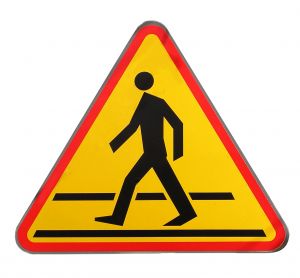
As we recently reported on our Boston Personal Injury Attorney Blog, a newly released report pointed out the top 200 most dangerous intersections for bicycle, car and pedestrian accidents in Massachusetts. This report was released to help residents identify and avoid dangerous areas, and to urge state officials to take action to help make these intersections safer.
949267_pedestrian_crossing_sign.jpg
This wasn’t the only recently released report that identifies dangers to pedestrians in the state. The AAA Foundation for Traffic Safety released a report that focused on pedestrian accidents, highlighting the main causes and factors, and providing recommendations to fix the problem.

Our Boston pedestrian accident attorneys understand that traffic-related accidents are the number one cause of death for people in the U.S. According to Transportation for America, there were more than 700 pedestrians killed in Massachusetts from 2000 to 2009. These accidents cost the state more than $3 billion. Our state’s Pedestrian Danger Index (PDI) is 24.9, which gives us a poor ranking of 42 out of the 50 states.

According to the Foundation, speed is the top contributor to the outcome of a pedestrian-car accident. The faster a vehicle is traveling when it strikes a pedestrian, the higher the risk is for that pedestrian to experience severe injury or death.

According to statistics from the report, a pedestrian faces a 10 percent chance of sustaining serious injury when hit by a vehicle that is traveling at 16 miles per hour. A pedestrian faces a 25 percent risk when a vehicle strikes at 23 mph, a 50 percent chance when a vehicle strikes at 31 mph, a 75 percent chance when a vehicle strikes at 39 mph and a 90 percent chance when a vehicle strikes at 46 mph.

The risk for death increases with the speed of the vehicle as well. A pedestrian faces a 10 percent risk of death when hit by a vehicle traveling at 23 mph during the time of impact, a 25 percent risk at 32 mph, a 50 percent risk at 42 mph, and a 75 percent risk at 50 mph.

These risks vary with the age of the pedestrian. A 30-year-old pedestrian hit by a vehicle traveling at 35 miles per hour faces the same risks as a 70-yer-old pedestrian who is hit by a vehicle traveling 25 miles per hour.

To help decrease the risks of these accidents, AAA recommends the following:

-Federal, state and local officials should reduce the speed limits in areas with a large population of pedestrians.

-Transportation officials should consider putting up a physical barrier to separate vehicular traffic and pedestrians in areas where a reduced speed limit wouldn’t benefit traffic flow.

-Vehicle creators should look into creating better pedestrian-detection systems to identify pedestrians within a dangerous distance from a vehicle and to warn the driver or to stop the vehicle automatically.

According to the National Highway Traffic Safety Administration, there were nearly 50 pedestrian fatalities in the state of Massachusetts in 2009.
Continue reading

are a number of weather and street conditions that can contribute to your risks of being involved in a car accident in Massachusetts. According to the Commonwealth of Massachusetts’ Motor Vehicle Crash Operator Report, you are required to report the condition of the weather and the road during the accident. You can report if the weather/roads were, dry, wet, snowy, icy, sandy, muddy, dirty, oily, slushy, foggy, windy or any other condition.
1116432_snowy_road_3.jpg
Our Boston car accident attorneys would like to remind motorists to adjust their driving habits according to the weather conditions. As we head into fall and eventually into winter, weather conditions can make driving rather difficult. When these conditions are poor, your risks for being involved in an accident increase.

The time or day also has an impact on your safety and your risks of a car accident. The accident report also leaves a section for you to check off the light conditions; daylight, dawn, dusk, dark, etc.

Poor weather conditions can contribute to accidents that normal weather would typically not cause. Because of the number of storms that we’ve already experienced this year, many residents cannot afford to take any more days off of work and will make the trek through any ad all dangerous weather conditions.

“Police continue to respond to numerous spinouts, disabled motor vehicles and minor crashes caused by the weather,” said the Massachusetts State Police.

As the temperature drops, the AAA Foundation for Traffic Safety offers drivers these reminders:

-Get enough sleep and avoid driving while drowsy.

-Never attempt to warm up your car in a garage or any other enclosed area.

-Make sure that your tired are properly inflated. Underinflated tires increase your risks of an accident on our roadways.

-Never combine radial tires with any other type of tire on your vehicle. Make sure that all four tires are the same and are properly fitted for your car.

-Always keep your gas tank half full so that you’re less likely to experience gas line freeze-up.

-Try not to use your parking brake in snowy, cold or rainy weather.

-Never use cruise control when you’re navigating along a slippery surface, whether it be icy, snowy or sandy.

-Always buckle up when your drive, regardless of how short your trip may be.

-Keep an eye on the local weather reports.

-Make sure to have a safety kit in your vehicle that includes gloves, hats, food, water, a cell phone and blankets.

-If you’ve broken down, tie a brightly colors piece of cloth to eh top of your vehicle’s antenna to help to alert motorists and to signal distress. Keep the dome light on in your vehicle if possible. This light only uses a tiny bit of electricity and will help emergency response personnel so find you.

-Always make sure that your exhaust pipe is clear of any snow.

Severe weather is both frightening and dangerous. Drivers are urged to review these rules and consider creating a safety plan to deal with a roadside emergency. Practice extreme caution when driving in shoddy weather conditions.
Continue reading

A trucker from New Hampshire who was hauling garbage was both speeding and driving while distracted as he caused a trucking accident in New England involving an Amtrak train. The distracted driver realized too late that he and his tractor-trailer were going to collide with the train. By the time he hit the brake, his vehicle slid more than 200 feet directly into the path of the oncoming train. The fiery collision killed the truck driver and injured a number of others, according to the Boston Globe.
mhivPy0.jpg
Reports indicate that the 35-year-old driver was on the phone with his employer for five minutes just before the accident happened. He was driving 20 miles above the speed limit. A following motorist said he witnessed the big rig swerve along that roadway.

Our Massachusetts trucking accident attorneys understand distracted drivers cause dangerous situations. They pose serious threats to all motorists on our roadways, regardless of how attentive we may be.

Investigators concluded that the truck driver was on the phone when the truck and the train collided. The train, traveling between Boston and Portland, was traveling at approximately 70 miles per hour with more than 110 passengers on board. Witnesses report that the train was thrown off the track, flames shot nearly three stories high and trash from the tractor-trailer was thrown everywhere. The truck driver’s body reportedly landed nearly 400 feet from the accident in a ditch. Two Amtrak employees and four passengers were injured.

The truck driver’s records indicate that he and his vehicle had passed an inspection at a weigh station in Eliot, located just before the scene of the accident. Reports also indicate that the train and the train’s horn, lights and gates were all working properly.

Another trucker, Greg Daigneault from North Berwick, says that the driver was significantly exceeding the speed limit and was driving erratically.

“He crossed the center line at least twice and steered into the breakdown lane at least twice,” said Daigneault.

Data from the trucker’s GPS unit indicated that he neglected to slow down when the posted speed limit went from 55 to 40 miles per hour, and then down to 30 miles per hour.

This accident happened as the driver was making his second run of the day for Triumvirate Environmental Inc., a company in Somerville. He had started his work day at 6 a.m. and the accident occurred shortly after 11 a.m.

The driver’s cell phone records reveal that he had 14 phone calls from 7:37 a.m. to the time of the accident. The last call, between him and his boss, happened during the same time that officers received 911 calls reporting the accident.

It’s no secret that driver distractions can lead to fatal accidents. The risks heighten when a large truck or a train is involved. Drivers are encouraged to stay focused, alert and distraction-free to avoid these types of accidents. All too often, innocent people are killed because of accidents that involve a distracted driver.
Continue reading

There’s a new cartoon that’s going to teach your child some useful tools to remember when traveling near or in cars. The National Highway Traffic Safety Administration (NHTSA) has partnered up with Chuggington, a popular animated series, in an attempt to help prevent injuries to children in Massachusetts and elsewhere.

Children under the age of 8 are the target audience for this campaign, which includes downloadable safety tips, a kid-focused safety pledge and a number of activities for parents and caregivers to practice with children.
1222592_evil_car.jpg
“Educating children at an early age about the importance of wearing bicycle helmets, looking both ways when crossing the street and buckling up leads to a lifetime of good traffic safety habits,” said Ray LaHood, the U.S. Transportation Secretary.

Our Boston injury lawyers understand that car accidents continue to be the number one cause of death for children. It’s estimated that there are more than 1,300 deaths and roughly 180,000 injuries to children under the age of 15 in car accidents in the U.S. in 2009. There were more than 260 deaths and nearly 200,000 injuries that occurred to child pedestrians in 2007 while playing around or in vehicles. For this reason, the new campaign will cover safety tips for bicyclists, school bus riders, pedestrians and child car seats.

Throughout the new series, the characters will be learning important lessons in each episode that will help children to understand the dangers associated with each of these modes of travel. Through each episode, characters will earn rewards, or badges, for practicing safe behavior. The creators will be pushing the “The ‘Think Safe, Ride Safe, Be Safe!’ pledge to these children, which is meant to teach your child to do exactly as it says. The show aims to get children excited about learning safety rules.

This campaign was launched just in time for National Child Passenger Safety Week, which is used to urge parents to review the rules and recommendations regarding their child and their child’s car seat. During this time, parents can visit one of the many child seat inspection locations in Massachusetts to have their child’s seat examined and installed by a certified technician. The inspections are most oftentimes free of charge and they can teach you the proper techniques to install a child seat. You are urged to call and make an appointment before visiting any location.

According to national statistics, about three-fourths of all child car seats in the U.S. are installed incorrectly. We recently told you about different ways to ensure that your child is safely buckled during every car ride and the Massachusetts child restraint laws on our Boston Car Accident Lawyer Blog.

Parents are urged to continue to discuss safety tips with young children in an effort to help prevent any serious injury. It is important to equip your child with the knowledge and skills to be able to travel safely.
Continue reading

As we recently reported on our Boston Car Accident Lawyer Blog, our state keeps upping the restrictive laws within our Graduated Drivers Licensing (GDL) program to help reduce the risks of teen car accidents in Massachusetts. While these new restrictions seem to be doing the job for young, newly-licensed drivers, the problem is that 18-year-old drivers are experiencing an increased risk for fatal car accidents once the restrictions are lifted, according to CNN Health.
mirw3Di.jpg
Our Boston teen car accident attorneys understand that these recently released statistics illustrate the importance of parental involvement in a young driver’s life. Parents and guardians are urged to continue to keep safe driving habits as a frequent topic of conversation long after your young one has completed the GDL program, which began in the United States in 1996.

A recent study from the Journal of the American Medical Association concludes that from 1986 to 2007, 16-year-old drivers who participated in a strict GDL program experienced a decrease of more than 25 percent in fatal car accidents than those who weren’t involved in a strict program. However, 18-year-old drivers who had completed a strict GDL program saw more than a 10 percent increase in fatal accidents compared to those who hadn’t participated in a strict program.

“Right now, we’re not getting the net effect across all teens that we’re hoping for,” says Scott V. Masten, Ph.D., author of the study.

Advocates are unable to explain why 18-year-old drivers experience the sudden increase in fatal car accidents. Some believe it’s a reaction to the restricted driving stages they experience in a strict GDL program. Since the young drivers were sheltered from dangerous driving habits, they become overwhelmed once these restrictions are lifted.

The National Highway Traffic Safety Administration reports that approximately 2,300 drivers between the ages of 15 and 20 were killed in traffic accidents in the U.S. in 2009. There were approximately 195,000 members of this age group injured in the more than 5,100 traffic accidents that involved one of these young drivers.

As a parent, stay involved in your teen’s driving career by:

-Asking that your child calls you once he or she arrives at their destination, and then once again when they’re leaving to head home.

-Limit the number of passengers that are allowed to ride in your teen’s vehicle. Driver distractions, including other passengers, are one of the main causes for teen car accidents.

-Create and enforce a teen-parent driving contract to law down the ground rules for driving and the consequences for breaking them.

-Take a ride with your child regularly. This will help you to keep an eye on their driving habits.

-Set a good example. Be sure to always practice what you preach and be on your best driving behavior when your teen is riding in the vehicle with you.

In Massachusetts, there were nearly 50 people killed in motor-vehicle accidents in 2009 that involved a teenage driver. Teen driving accidents can be prevented with thorough and extensive teen-driver education.
Continue reading

The State of Massachusetts is celebrating National Child Passenger Safety Week through this Saturday, Sept. 24. According to the Executive Office of Public Safety and Security’s Highway Safety Division (EOPSS/HSD), child passenger safety is a top priority of our highway officials. These departments continuously work with one another and with local municipalities and local organizations to help promote proper child passenger seat usage and installation. Throughout this awareness week, parents and caregivers have been urged to join the festivities, spread the word and check out one of our state’s Child Passenger Safety checkup events. These child-seat checkups have been taking place throughout the commonwealth, and will help to ensure that adults are properly buckling in their little ones to protect their safety in the event of a car accident in Massachusetts.
n5oAywU.jpg
“As a mother of four children, I know how important it is to correctly select, install and use child safety seats,” said Sheila Burgess, director of the Highway Safety Division for the Executive Office of Public Safety and Security, according to a news release. “This checkup and the others taking place across the state represent our commitment to ensuring parents and caregivers are safely buckling up children as well as themselves on every drive.”

Our Boston car accident attorneys understand that more than 75 percent of child safety seats are installed into vehicles improperly by an adult. Parents are urged to stop by one of the Child Safety Seat checkup locations just to make sure you’re properly strapping in your child. At these inspection stations, nationally certified child-passenger safety officials will be available to inspect your techniques and help you to improve your child’s safety. Improperly buckling in a young passenger can result in serious injuries.

According to Massachusetts Child Passenger Safety Law:

-As of July 2008, all children that ride in a motor vehicle must be seated in a federally approved child seat.

-Children are required to be properly fastened and secured in a child seat until they are at least 8 years old or taller than 57 inches.

-A booster seat/seat belt combination must be worn by all children who have outgrown the height and weight requirements for a child seat. This usually happens when a child weighs at least 40 pounds, has reached the age of 8 or is taller than 57 inches.

-Children 13 and older are required to wear a seat belt.

According to the Centers for Disease Control and Prevention, there were more than 1,300 children under the age of 15 killed in traffic accidents in 2009. Nearly 180,000 young passengers were injured in these incidents. Many of these fatalities and injuries could have been prevented if parents had taken the time to properly restrain children in a vehicle during every car ride.
Continue reading

A recent motorcycle accident in Randolph landed a 62-year-old man in the Boston Medical Center. The man was injured after colliding with a motor vehicle at the intersection of Pond Street and North Main Street at approximately 4 p.m. Traffic was slowed and rerouted through a detour while the accident was investigated, according to Enterprise News.
msDc7u8.jpg
Our Boston injury attorneys ask that all motorists keep an eye out for motorcycle riders during these last few weeks of riding season. Riders are unable to navigate our roadways year round, so when the weather permits, they hit the open road in full force. Unfortunately, motorcyclists are extremely vulnerable to serious injuries in the event of a traffic accident. Typically, these motorcycle riders are often overlooked by car and truck drivers because of the bikes’ smaller size. Motorists are asked to remain aware of their surroundings to help keep our riders safe while they’re still able to ride.

The Massachusetts Department of Transportation (MassDOT) has conducted a number of studies on the dangers and riding techniques of our motorcyclists. Transportation officials understand the risks that these motorists face for a serious accident on our roadways and are making strides in helping to preserve their safety.

According to MassDOT, a rider is most likely to experience an accident when:

-A vehicle makes a left-hand turn in front of a motorcyclist.

-A motorcyclist gets stuck in a vehicle’s blind spot.

-A motor vehicle follows too closely behind a motorcycle.

-Turn signals are not used.

-You fail to acknowledge road laws.

-There are dangerous road conditions, including railroad tracks, wet leaves, potholes and other obstructions.

-Weather conditions are poor.

-Your line of vision is obstructed. Oftentimes, sport utility vehicles, commercial trucks and delivery vans can block a motorist from seeing a motorcyclist.

The DOT offers this advice to motorists to help avoid an accident with a motorcyclist:

-Remember that motorcycles can easily be overlooked on our roadways.

-Our eyes are conditioned to spot other passenger-vehicles. Take the extra time to watch carefully for motorcyclists and other travelers in smaller vehicles.

-Be aware of the road, traffic and weather conditions, all three of which require drivers to be extra vigilant. Motorcyclists also have to adjust their driving skills. During these times it can be difficult to judge and predict when riders may take evasive action.

-Check twice, save a life.

According to the National Highway Traffic Safety Administration, of the 334 roadway fatalities in Massachusetts in 2009, approximately 54 involved motorcyclists.

A number of these accidents, both of passenger-vehicle and of motorcycle riders, can be reduced and potentially prevented if we all take a look at our own driving habits and make a conscious effort to make them more aware, more cautious and more defensive.
Continue reading

A new recommendation from the National Transportation Safety Board (NTSB) could put an end to cell phone-using truck drivers.

The NTSB recently recommended this regulation to help prevent trucking accidents in Massachusetts and elsewhere. Both hand-held and hands-free devices would be prohibited, according to CNN.

This isn’t the first time that the NTSB has recommended specific drivers to hang up the phone while operating a motor vehicle. The Board previously banned cell phone use by bus drivers and newly-licensed drivers.
12057_dangerous_truck.jpg
Our Boston truck accident attorneys understand how critical this type of ban is. Too many accidents are being caused by distracted drivers. These accidents can oftentimes lead to fatal results when a large, commercial truck is involved.

In 2010, the Federal Motor Carrier Safety Administration banned truckers from sending or receiving text messages while driving. If a trucker is busted texting at the wheel, they could potentially face a fine of $2,750.

The most recent recommendation banning cell phone use by truckers came after a 45-year-old truck driver in Munfordville, Kentucky caused an accident that killed him and took the lives of 10 others. Officials believe that he was using his cell phone when the accident happened.

After officials investigated the accident, they concluded that the driver had used his cell phone for text messages and calls nearly 70 times while he was driving in the 24-hour period before that accident. Phone records revealed that he made four phone calls just minutes before the fatal accident happened.

The accident happened as the tractor-trailer left the roadway on Interstate 65. It crossed over a 60-foot median, over a cable barrier system and crossed into lanes of oncoming traffic. The truck struck a van that was carrying a dozen people. The driver of the van, nine of its occupants and the truck driver were killed in the collision.

The investigation revealed that the driver had no health problems, the road and weather conditions were fair and there were no mechanical problems with the big rig. Officials believe the distractions caused by his cell phone are to blame for the fatal crash.

According to Deborah Hersman, a safety board chairman, a cell phone ban for truck drivers has the ability to save lives on U.S. roadways.

“When you are at the wheel, driving safely should be your only focus,” said Hersman.

These recommendations would apply to all drivers that currently possess a commercial driver’s license. This means that all interstate commercial drivers and all in-state drivers that operate under the authority of any similar license would be covered.

According to Boyd Stephenson, American Trucking Association’s manager of safety, a great number of trucking companies already have regulations governing the use of cell phones by truck drivers. A complete ban would help to increase the safety of all motorists on our roadways.
Continue reading

Contact Information